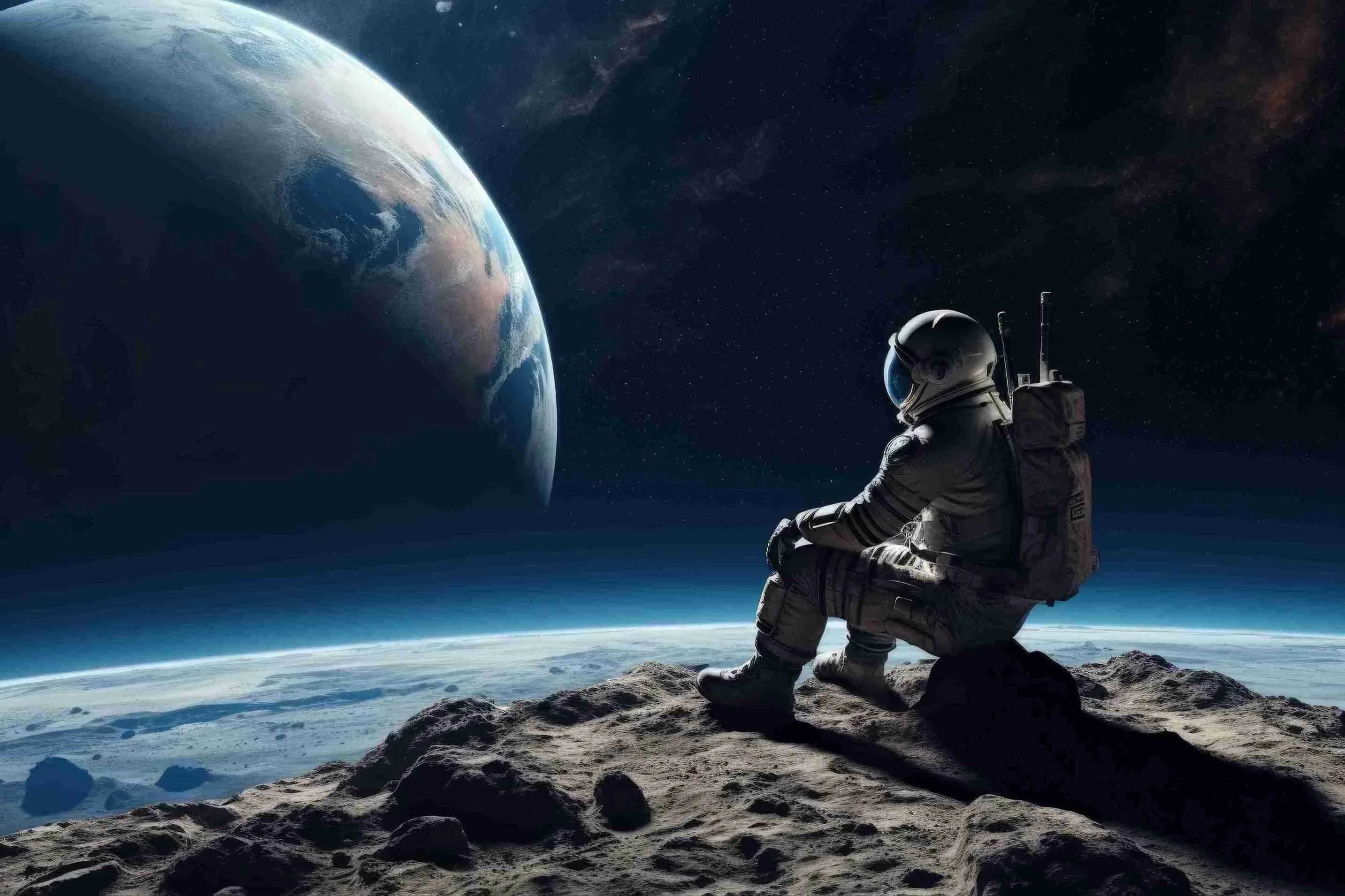
NASA astronauts are among the most iconic figures in modern science, exploration, and human achievement. Representing the peak of training, intelligence, and resilience, they have undertaken missions that expand our understanding of space, inspire millions, and push the boundaries of what humans can achieve. From the Mercury Seven to crews aboard the International Space Station, NASA astronauts have shaped both history and the future of space exploration.
The astronaut program at NASA officially began in 1959 with the selection of the Mercury Seven. These first seven astronauts, including John Glenn, Alan Shepard, and Gus Grissom, were carefully chosen for their exceptional skills as military test pilots, physical fitness, and ability to remain calm under extreme stress. The Mercury Seven laid the foundation for the Gemini and Apollo missions, which ultimately led to the historic moon landing in 1969.
The Mercury Program was NASA’s first manned space initiative. Its primary goal was to test human spaceflight capabilities and ensure astronauts could survive and perform tasks in orbit. Missions were short, ranging from 15 minutes to several hours, but they provided crucial data on human endurance, spacecraft control, and orbital mechanics. Alan Shepard became the first American in space, and John Glenn became the first American to orbit Earth, proving that humans could safely operate in space.
Following Mercury, the Gemini Program focused on more complex objectives, such as rendezvous and docking, extended time in space, and spacewalks. NASA astronauts underwent intensive physical training, simulations, and underwater exercises to prepare for the zero-gravity environment of space. Gemini missions tested vital technologies and strategies, which would later be essential for the Apollo lunar missions. Astronauts had to master spacecraft systems, orbital mechanics, and EVA (extravehicular activity) procedures to ensure mission success.
The Apollo Program marked the pinnacle of NASA astronaut achievements. The program aimed to land humans on the Moon and return them safely to Earth. Apollo 11 achieved this goal in 1969, with astronauts Neil Armstrong and Buzz Aldrin making history as the first humans to walk on the lunar surface. Michael Collins remained in orbit aboard the command module, ensuring mission safety. The Apollo missions required astronauts to combine technical expertise with physical endurance and psychological resilience, as they faced extreme isolation, radiation exposure, and high-risk maneuvers.
NASA astronauts continued to evolve during the Space Shuttle era, which began in 1981 with the launch of Columbia. Shuttle missions expanded human capabilities in space, including satellite deployment, scientific research, and construction of the International Space Station. Astronauts during this period had diverse backgrounds, including scientists, engineers, and medical professionals. The shuttle program emphasized teamwork, problem-solving, and adaptability, as astronauts conducted missions in both Earth orbit and low-gravity laboratory environments.
Today, NASA astronauts are integral to the operations of the International Space Station (ISS), a multinational laboratory orbiting Earth. Modern astronauts conduct experiments in biology, physics, and materials science, helping humanity better understand life in microgravity. They also train for potential future missions to the Moon and Mars, requiring mastery of advanced robotics, complex spacecraft systems, and long-duration living in confined environments. NASA’s astronaut training now spans years, incorporating physical conditioning, language skills, leadership training, and emergency response drills.
The selection process for NASA astronauts is extremely competitive. Candidates typically hold advanced degrees in engineering, physics, or biological sciences and have extensive experience in high-pressure professions. After initial selection, candidates undergo rigorous physical exams, psychological testing, and survival training. They learn spacecraft operation, extravehicular activity, robotics, and scientific research techniques. This training ensures astronauts are prepared for both the expected and unexpected challenges of space missions.
Life as a NASA astronaut is both rewarding and demanding. Astronauts spend months or even years in preparation before each mission. Once in space, they live in microgravity, which affects everything from sleep patterns to bone density. Daily routines include exercise, scientific experiments, equipment maintenance, and communication with mission control. Astronauts must maintain focus, composure, and teamwork under constant pressure while representing humanity on the global stage.
NASA astronauts face numerous challenges and risks. Spaceflight exposes the human body to microgravity, radiation, and isolation. Equipment malfunctions, medical emergencies, or psychological stress can pose serious threats. Astronauts are trained extensively to handle these risks, conducting simulations and emergency drills that mirror potential space hazards. Despite the dangers, astronauts continue to push boundaries, driven by scientific discovery and the spirit of exploration.
Over the decades, NASA has produced many notable astronauts whose achievements have inspired millions. Neil Armstrong, Buzz Aldrin, John Glenn, Sally Ride, and Chris Hadfield are just a few examples. Their missions demonstrated courage, ingenuity, and perseverance, serving as role models for future generations. Women and international astronauts have also become integral to NASA’s missions, reflecting the evolving diversity and global collaboration in space exploration.
Looking forward, NASA astronauts will play a central role in the Artemis program, which aims to return humans to the Moon and eventually send astronauts to Mars. These missions will require innovations in life support, propulsion, and habitat construction. The astronauts of the future will be trained in new technologies and interdisciplinary skills, continuing humanity’s journey into deep space. NASA astronauts remain the embodiment of human curiosity, resilience, and the drive to explore the unknown.