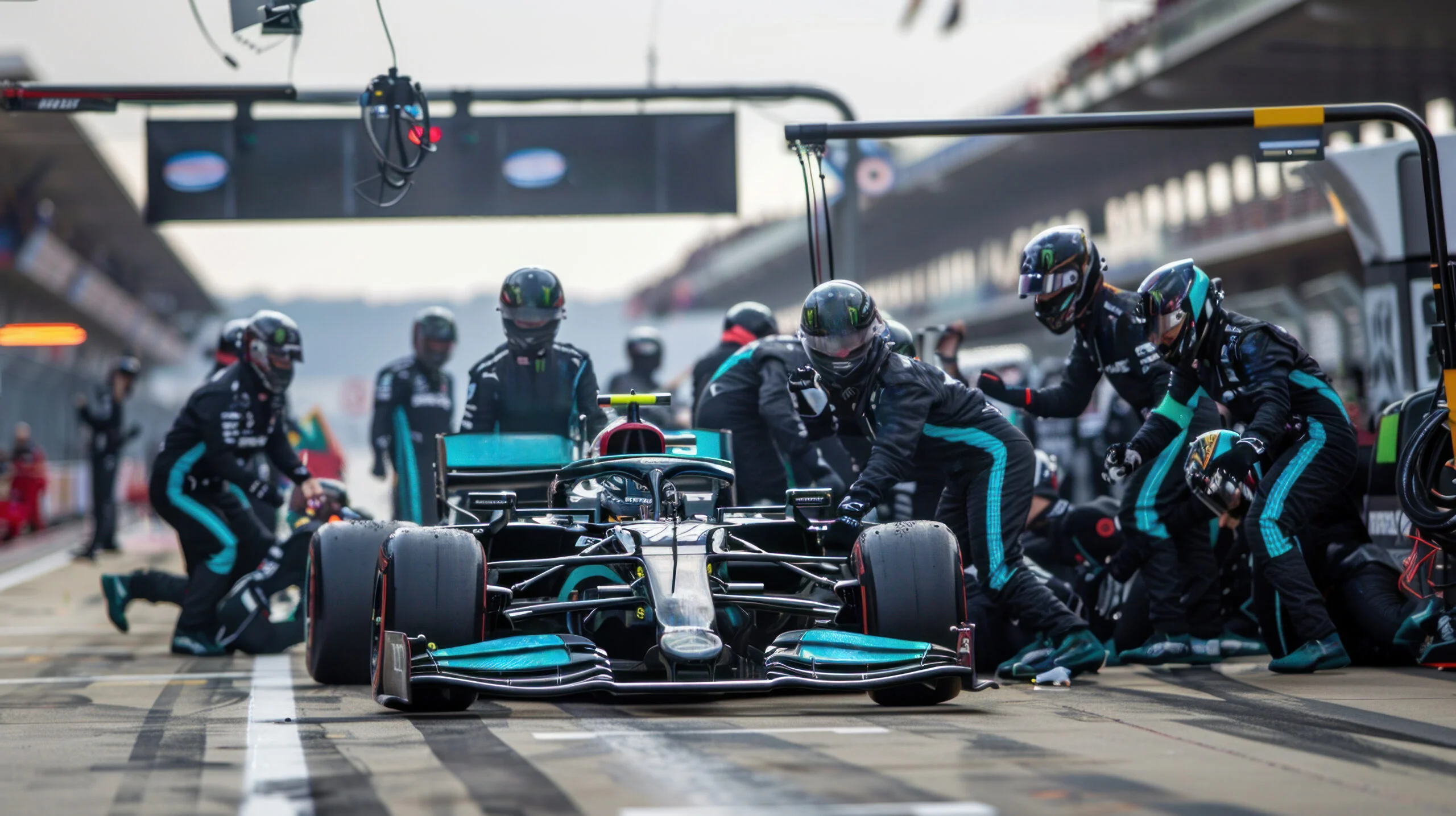
The Formula 1 Sprint format is a dynamic addition to the Grand Prix weekend, designed to increase on-track action and excitement by fundamentally changing the structure of a standard race weekend. Introduced to complement the traditional Grand Prix, the Sprint is a shorter race that places a premium on flat-out speed and aggressive driving over complex strategy.
The Sprint is a condensed race held on a Saturday.
- Distance and Duration: The Sprint covers a distance of 100km, which is approximately one-third of the length of a typical Grand Prix. This short distance is carefully chosen to encourage a dynamic, aggressive race that lasts for about 30 minutes, minimising the need for complex tyre and fuel management strategies.
- No Mandatory Pit Stops: Unlike the Grand Prix, there are no mandatory pit stops. While pit stops are not banned, the race is simply too short for tyre changes to be an effective strategic option, further ensuring the action is focused purely on racing.
- Points System: Points are awarded to the top eight finishing cars, distributed from eight points for first place down to one point for eighth place. These points contribute directly to both the Drivers’ and Constructors’ World Championships.
A Sprint weekend is a high-density, three-day event that significantly alters the standard Grand Prix schedule, replacing two practice sessions with competitive action.
| Day | Standard Weekend Session | Sprint Weekend Session | Purpose |
| Friday | Free Practice 1 (FP1) | Free Practice 1 (FP1) | Standard practice and car setup. |
| Friday | Free Practice 2 (FP2) | Sprint Qualifying (SQ) | Sets the grid for Saturday’s Sprint race. |
| Saturday | Free Practice 3 (FP3) | F1 Sprint Race | Short race for points and a spectacular Saturday show. |
| Saturday | Qualifying | Grand Prix Qualifying | Sets the grid for Sunday’s main Grand Prix. |
| Sunday | Grand Prix | Grand Prix | The main event with full points. |
The new format introduces a unique Sprint Qualifying (SQ) session on Friday. This session is similar to the traditional Qualifying but is significantly shorter, split into three stages (SQ1, SQ2, and SQ3) lasting 12, 10, and just 8 minutes respectively. This compressed format increases the intensity, requiring drivers to perform under immediate pressure to set the grid for the Saturday Sprint.
The F1 Sprint was conceived to enhance the spectacle of the race weekend. By placing a qualifying and a competitive race on Friday and Saturday, it ensures that all three days offer meaningful, high-stakes track action. The chosen venues for Sprint events are typically tracks known for their excellent overtaking potential, guaranteeing that the short-format race is a flat-out, aggressive, and highly entertaining battle for position from the very start.
The format has been a point of debate, but it has undeniably succeeded in making the entire Grand Prix weekend more compelling for fans by adding an extra layer of competitive tension before the main event on Sunday.