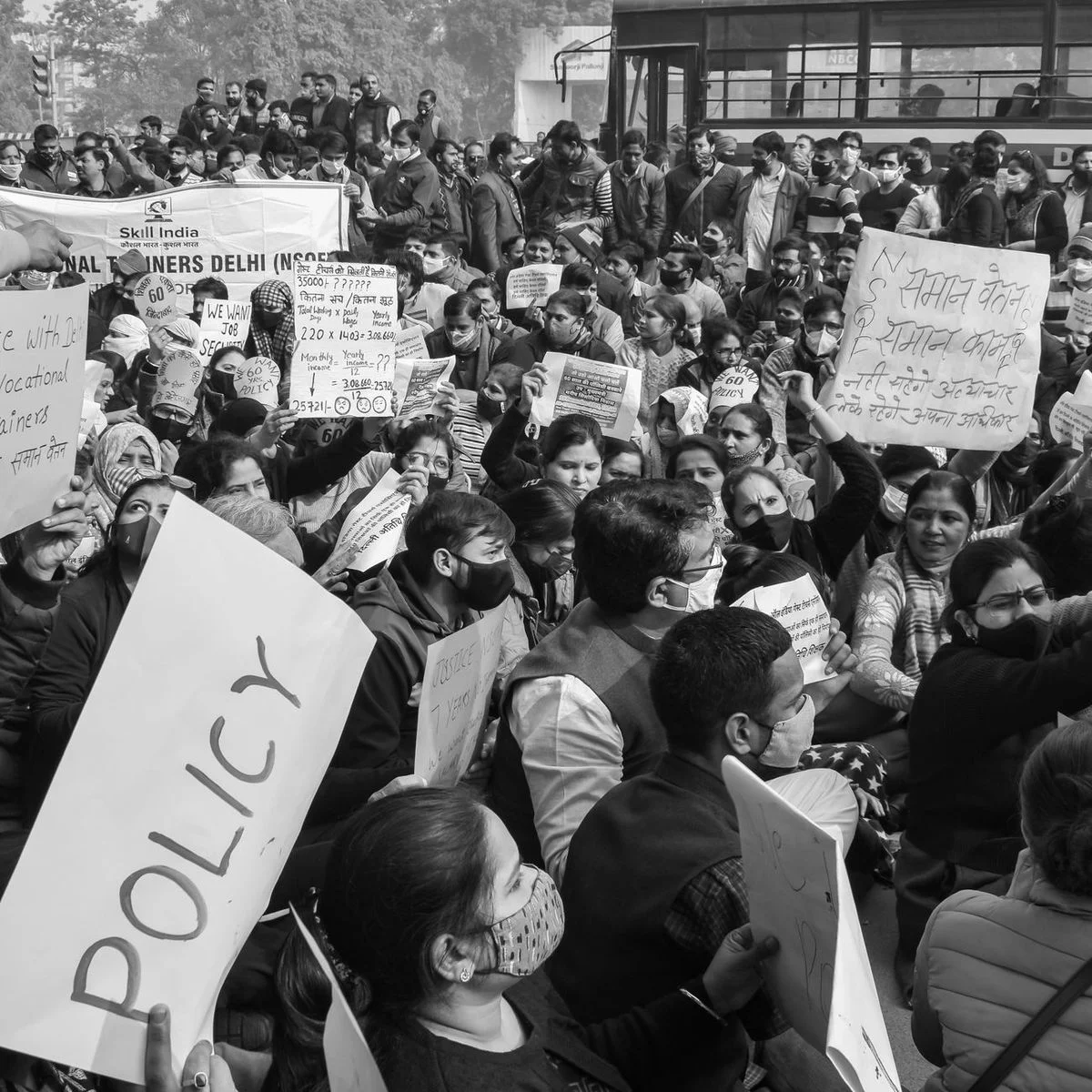
Students and members of ‘Gen Z’ have been at the forefront of recent protests in Delhi, India, with reports indicating a defiance of lockdown measures and marches towards the country’s parliament. Known as the ‘Cockroach movement’, these demonstrations escalated around 20-21 July 2026, involving young people who have shown no sign of backing down, according to The Guardian.
The protests have seen participants gathering at key locations, including Jantar Mantar, and pressing their demands despite official restrictions in the Indian capital. This youth-led activism highlights a determined stance, with some protesters adopting the slogan, ‘Now or never’.
Background
The ‘Cockroach movement’ has emerged as a significant force in India’s capital, drawing in a substantial number of students and young people. These demonstrations have been documented across Delhi, with reports highlighting the participation of ‘Gen Z’ in what has been termed a ‘CJP protest’ at Jantar Mantar, as noted by the BBC. The movement gained significant traction, particularly around 20 July 2026, when protesters chose to defy lockdown orders to make their voices heard.
This period of unrest follows other notable discussions and events concerning India, such as the debate igniting over India-Pakistan peace dialogue, indicating a broader environment of political and social engagement.
Defiance and March on Parliament
On 20 July 2026, students took to the streets of Delhi, defying an existing lockdown, to march towards India’s parliament. This act of defiance underscored the intensity of their convictions, with participants expressing a ‘now or never’ sentiment, according to Al Jazeera. The march represented a direct challenge to the restrictions in place, demonstrating the students’ commitment to their cause.
The scale of the student involvement and their willingness to confront official measures highlight a deep-seated resolve within the protesting groups. The collective action and public demonstrations aimed to bring attention directly to the nation’s legislative body.
Ongoing Demonstrations
The momentum of the protests continued into 21 July 2026, with the ‘Cockroach movement’ protesters showing no indication of retreating. The Guardian reported that these demonstrations persisted in Delhi, indicating the sustained determination of the participants. The ongoing nature of the protests, including those held at Jantar Mantar, underscores the enduring commitment of the students and Gen Z involved.
Despite the challenges, the protesters have maintained their presence, signalling a long-term engagement with their objectives rather than a fleeting moment of dissent. This sustained effort reflects a deeply held belief among the youth that their actions are critical for change.
FAQ
-
What is the “Cockroach movement”?
The “Cockroach movement” is the name attributed to ongoing protests in Delhi, India, primarily involving students and young people who have shown a strong resolve not to back down, as reported by The Guardian.
-
Who are the primary participants in these protests?
The protests are primarily led by students and members of “Gen Z”. Al Jazeera highlighted the role of students defying lockdown, while the BBC noted the involvement of “Gen Z” in a “CJP protest” at Jantar Mantar.
-
Where are the protests taking place?
The protests are concentrated in Delhi, the capital of India. Key locations mentioned include marches on India’s parliament and demonstrations at Jantar Mantar.
-
What is the “CJP protest”?
The BBC reported on a “Gen Z CJP protest” occurring in Delhi at Jantar Mantar. The specific issues or demands of this particular aspect of the protest are not detailed in the provided source material beyond its identification as a protest by Gen Z.
What this means for you
For Birmingham and West Midlands readers, who are part of a diverse community with significant ties to various parts of the world, including India, developments in Delhi can be of particular interest. The determination shown by students and Gen Z in India resonates with broader global conversations around youth activism and political engagement.
The resolve displayed by the ‘Cockroach movement’ in Delhi contributes to the wider understanding of socio-political landscapes in countries with significant diaspora in the UK. Many in our community follow news from the subcontinent closely, keeping informed on social movements and events that shape the region.
This ongoing dialogue around activism and social change mirrors how communities in the West Midlands react to various cultural and political news, such as local responses to topics like Diljit Dosanjh’s ‘Satluj’ being pulled, reflecting the strong connections and interests within our diverse population. While the immediate impacts are felt in Delhi, such events contribute to a global awareness that is increasingly relevant to our interconnected world.